

Leak repairs based on evidence, not guesses
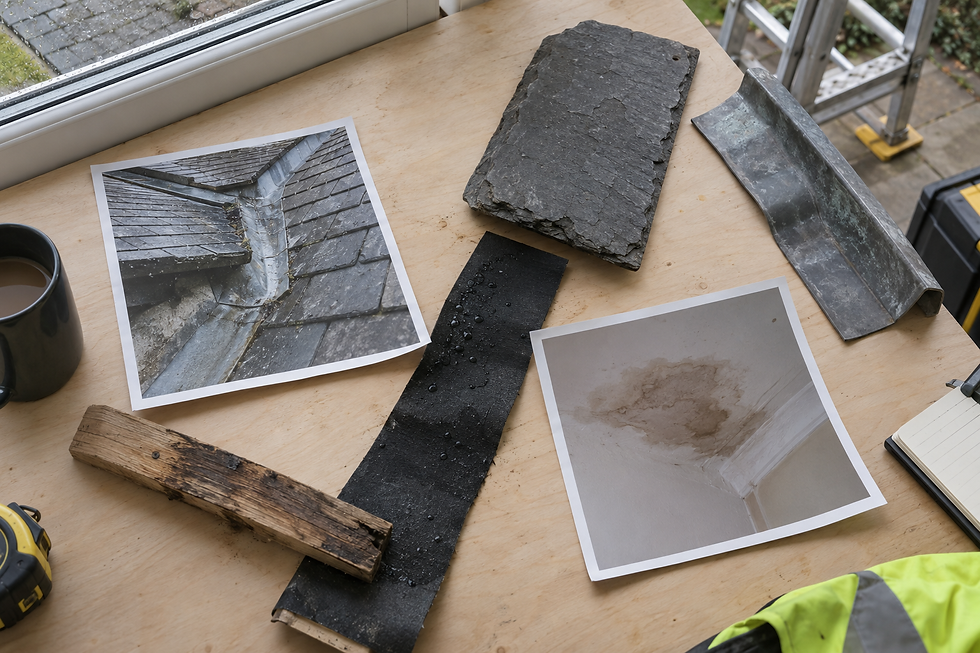
The indoor drip may not mark the entry point
Water takes inconvenient routes. It can enter through a slate, flashing or junction, travel along underlay and timber, then appear several feet away as a stain or drip. We don't assume the patch on the ceiling sits beneath the fault. To investigate a leaking roof in Dalkeith, we inspect the covering, penetrations, junctions and drainage details across the affected section. Tell us when the mark appears, which wind direction brings it on and whether it changes during heavy rain. Those details can help narrow the route water is following.
Find the route before choosing the repair
Damp patches, peeling finishes and dark staining all show that moisture has arrived, but they don't identify the failed component. We look for cracked coverings, open joints, lifted lead and blocked or damaged drainage details. Once the entry point is found, we repair the relevant material rather than coating the general area and hoping for the best. Later rainfall provides the useful test, so we recommend watching the repaired area through changing conditions. Early action can also limit further wetting of insulation, timber and interior finishes.
Frequently asked questions
Why does the roof only leak in certain weather?
Wind direction and rainfall intensity change how water reaches roof joints and coverings. A weak detail may stay dry in light vertical rain but leak during wind-driven weather. Tell us when the problem appears because that pattern can support fault tracing.
Can you find a leak from the ceiling stain alone?
The stain gives us a useful starting area, but water may have travelled before becoming visible. We inspect above and around it, including coverings, flashings, penetrations and drainage details. Access to the loft can also help reveal the route moisture has taken.
How do we know the leak repair has worked?
The repair must address the identified entry point and failed roof component. Later rainfall then shows whether the area remains dry under the conditions that previously caused trouble. We recommend monitoring the original stain and surrounding roof space where accessible.