

From immediate exposure to permanent repair
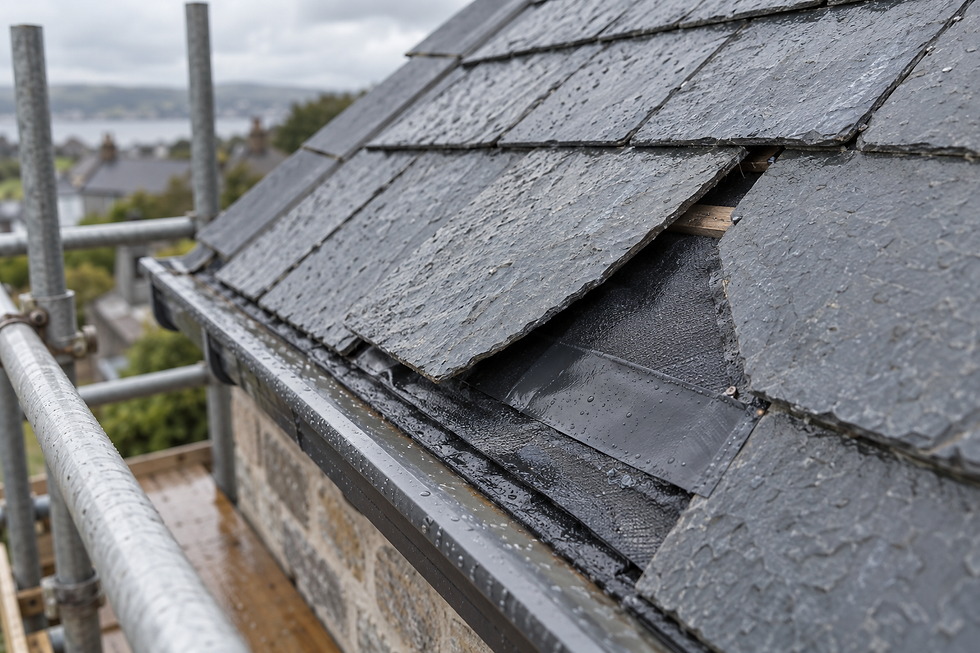
Treat loose materials and active leaks as urgent
Strong wind can lift slate, shift tiles and damage exposed roof edges. Heavy rain then finds the opened layers beneath, sometimes before the missing material is noticed outside. Check from a safe position and keep clear of anything loose. Don't climb onto a wet or storm-damaged roof. For storm damage roof repair in Dalkeith, tell us what you can see, where water is appearing and when the damage occurred. We assess the immediate exposure first, then inspect the affected section and connected details once access is safe.
Secure the roof before completing permanent work
An exposed section may need temporary protection before a lasting repair can be carried out. Conditions, access and material availability all affect what is safe at the first stage. Once the urgent risk is controlled, we inspect beyond the first missing slate or tile because wind can loosen neighbouring pieces without removing them completely. We handle slate, tile, felt and lead repairs, allowing permanent work to match the damaged material. Roof edges, junctions and underlay are also checked where the storm may have opened a wider path for rain.
Frequently asked questions
Should we inspect storm damage from a ladder?
No. Stay on the ground and keep away from loose materials, especially during strong wind or rain. Tell us what you can see safely, including missing pieces and indoor leaks. Roof access should wait until conditions and the property can be assessed properly.
Can storm damage be temporarily covered first?
Yes, temporary weatherproofing may be the safest first step when the roof is exposed but permanent work can't be completed immediately. We assess conditions and access, then explain what can be secured now and what follow-on repair is needed.
Why inspect beyond the first missing tile or slate?
Wind can loosen neighbouring coverings, damage edges or expose underlay without leaving an obvious gap from the ground. We check the connected section so the repair doesn't replace one missing piece while leaving unstable materials beside it.