

Focused repairs with the wider roof in mind
Repair the failed part, not just the stain
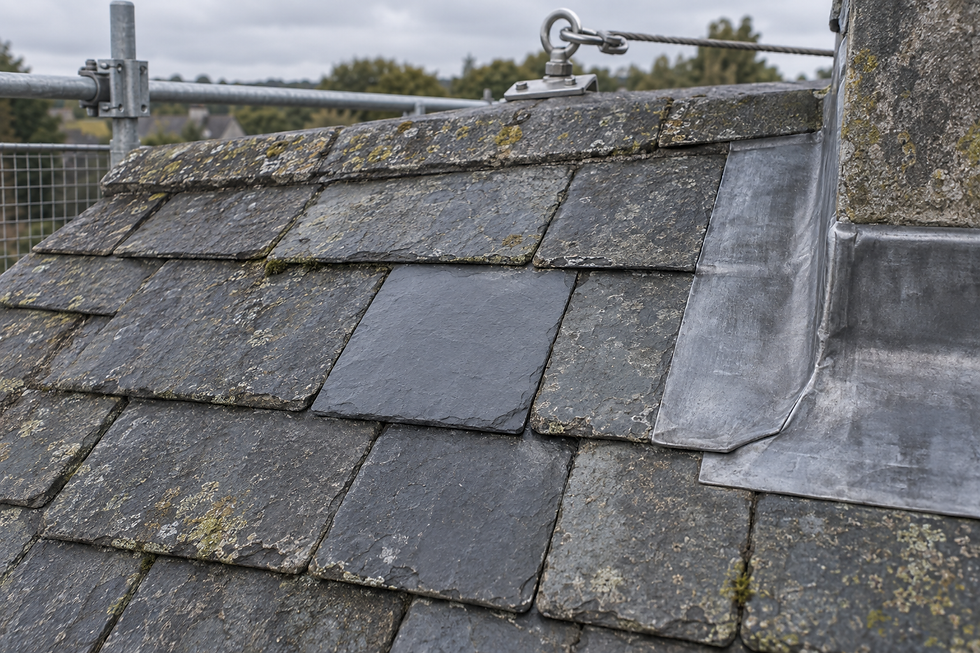
The obvious sign of roof trouble isn't always the source. Water can enter beside a cracked covering, loose detail or failed joint, then travel before it appears indoors. We trace the affected area and check the materials around it before choosing the repair. Roof damage repair may involve securing or replacing an isolated component, restoring local weatherproofing or opening a small section to reach the defect beneath. We handle minor jobs in Dalkeith as well as broader faults, so you don't have to wait for one loose slate to turn into a ceiling stain.
Know when a local repair is enough
A contained defect with sound materials around it can often be repaired without disturbing the rest of the roof. Widespread cracking, repeated slipping or deterioration across several sections may need a larger area renewed. We explain that difference after inspection. Acting early matters because water reaching the roof space can affect timber, insulation and interior finishes long after the first drip. Our work can cover slate, tile, felt, lead and connected details, allowing us to follow the fault instead of stopping at the first visible symptom.
Frequently asked questions
Can one missing slate or tile be repaired on its own?
It often can when the neighbouring covering, fixings and layers beneath remain sound. We inspect around the gap before fitting a compatible replacement. If nearby pieces are also loose or damaged, we'll explain the extra work rather than hiding it under one repair.
Why is the damp patch away from the visible roof damage?
Rain can track along underlay, timber or the roof slope before reaching the room below. That means the indoor mark isn't a reliable guide to the entry point. We check the covering, nearby junctions and drainage details to trace the route water is taking.
When is a larger roof repair more practical?
A broader repair may be sensible when several connected components have failed or deterioration extends beyond one isolated spot. We assess the surrounding covering and underlying condition, then explain the smallest scope likely to restore dependable weather protection.